



New York — October 6, 2026
General Discussion of the Economic and Financial Committee (Second Committee) at its 81st Session
Unofficial Translation
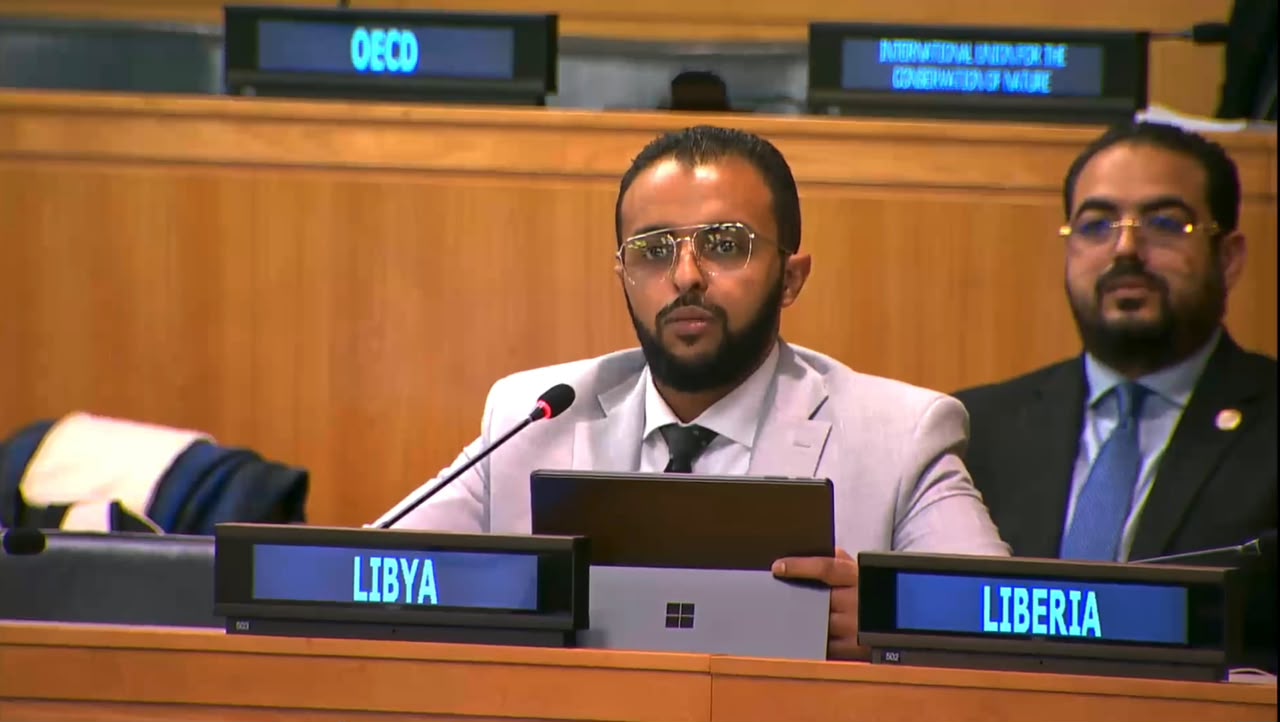
Libya Statement
Delivered by Mr. Farid F M Ben Fadil, First Secretary, Permanent Mission of the State of Libya to the United Nations
Thank you, Madam Chair,
At the outset, I congratulate you and the members of the Bureau on your election, affirming my delegation’s full support for the success of the Committee’s work. We also align ourselves with the statements delivered on behalf of the Group of 77 and China and the African Group.
Madam Chair,
We have less than four years left until 2030, and most of the Sustainable Development Goals are off track, as developing countries face a financing gap amounting to trillions of dollars annually. Therefore, the “Sevilla Commitment” must be translated into tangible action.
Here, we focus on four priorities:
First: Reform of the international financial architecture.
We need a stronger voice for developing countries in international financial institutions, fair solutions to the debt crisis, and measures that go beyond gross domestic product in determining eligibility for concessional finance.
Second: International tax cooperation.
We welcome the progress in the negotiations on the United Nations Framework Convention on International Tax Cooperation, and we stress that it must establish a fair and inclusive tax system for all.
Third: Combating illicit financial flows and asset return.
This is a matter of utmost importance to my country. Libya has suffered from the smuggling of its public funds and assets abroad, which are an inherent right of the Libyan people and their future generations. We stress the need to strengthen international cooperation to recover these assets and return them unconditionally to their countries of origin, and the importance of preserving the value of frozen Libyan assets and protecting them from erosion, so that they remain a resource for Libya’s development and reconstruction.
Fourth: Technology and artificial intelligence.
We stress the importance of bridging the digital divide and enabling developing countries to benefit from modern technologies and artificial intelligence and to build their capacities in support of the Sustainable Development Goals. We welcome the establishment of the Independent International Scientific Panel on Artificial Intelligence and the Global Dialogue on AI Governance; an inclusive governance in which the United Nations is central and developing countries have a voice that is heard.
Madam Chair,
In 2023, floods struck the city of Derna in the largest humanitarian disaster in Libya’s modern history. This disaster proved that climate change is a reality, not a future threat. We therefore call for fulfilling climate finance commitments and strengthening early warning systems.
As for migration, we affirm that Libya is a country of transit, bearing burdens that exceed its capacities. A sustainable approach to this file requires addressing its root causes in countries of origin, through investment in development and job creation, within a framework of shared responsibility and international solidarity.
In conclusion, Madam Chair,
Libya is moving forward on the path of recovery, reconstruction, and economic diversification, and we look forward to partnerships based on mutual respect, and to working constructively with all. Thank you.